
Víctor de Currea-Lugo | December 29, 2026
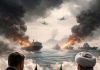
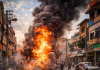
Humanity is living in a state of constant anxiety. The illusion of global peace after the Cold War has vanished amid today’s wars. The promise of a “new world order” has been shattered, amidst military interventions, economic expansionism, and the imposition of agendas that disregard the sovereignty of nations.
The list of current conflicts, both between and within states, is more than just an inventory: it is a map of disorder, fear, and conflicting interests. In 2024, that map had a name and a number: 37 active armed conflicts on the planet, the highest figure in more than a decade. And in 2025, the number is projected to exceed 50. This reality should make the audience feel the weight of ongoing suffering and instability.
Conflicts between countries have ceased to be isolated incidents and have become a permanent network. The war in Ukraine, which began in 2014 and deepened in 2022, opened a historic rift between Russia and the West. It is not just a border war: it is a dispute over the architecture of global power.
China, for its part, is challenging US dominance in the Pacific. The flashpoint is Taiwan, but behind it lies a deeper economic, technological, and military confrontation. Added to this are old disputes, such as Kashmir, where India and Pakistan—both with nuclear arsenals—keep alive a colonial wound that never healed.
In Africa, less visible tensions are manifesting along the border between Congo and Rwanda, and in Asia, along the border between Cambodia and Thailand. At the same time, the two Koreas continue to live under the shadow of an unresolved conflict. What is emerging is a return of interstate warfare as a normalized scenario.
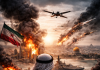
In the Middle East, Israel has multiplied its fronts of confrontation: Palestine, Hezbollah in Lebanon, Iran, Yemen, and Syria. Israel even bombed a key US ally in the region: Qatar. We are facing a unique case of a state confronting several countries in its area with complete illegality, almost simultaneously.
Israel is not facing a single conflict: it is facing an entire region. The occupation of Palestine remains the core of the problem, but not the only one. The war in Gaza—which must be called by its proper name: genocide—is not only a crime against the Palestinian people, but also an open wound in the conscience of humanity.
Israel’s regional actions reveal the importance of principled leadership; Colombia must leverage its position in the Security Council to promote peace and stability in such conflicts.
Every escalation, whether against Iran or Hezbollah, involves global actors like Washington, Moscow, and Beijing. Colombia’s active, principled role in the Security Council can influence these international dynamics.
Latin America appeared insulated from interstate wars, but Venezuela’s instability highlights the urgent need for Colombia to adopt a proactive foreign policy. Recognizing this threat can help Colombia influence regional stability and security.
The risk is twofold: an internal war that could escalate into an international conflict involving its neighbors. Unlike the Middle East or Eastern Europe, South America has been, in recent decades, a region free of interstate wars. Venezuela could shatter that balance.
And another stark truth: the persistence of Islamist radicalism, which has not disappeared; on the contrary, it has adapted. Following the weakening of Al-Qaeda and the territorial defeat of the Islamic State in Iraq and Syria, its manifestations have spread to the Sahel: Mali, Niger, and Burkina Faso face an insurgency fueled by poverty, state neglect, and foreign intervention.
The narrative of the “war on terror” solved nothing; on the contrary, it opened the door to new mutations of the phenomenon. Radical Islamist groups are inserting themselves into local conflicts, such as in Nigeria, where Boko Haram continues to operate, and in Somalia, where Al-Shabaab is active.
The paradox is that, in many cases, Western military interventions, presented as solutions, have ended up strengthening these groups. Radical Islamism is not just an ideology: it is also the violent expression of structural inequalities, failed states, and wars imposed from abroad.
The Formation of Blocks
The world is polarizing again, but in a different way than during the Cold War. There are no two blocks closed; somewhat flexible alliances, at times contradictory. On one side is the West, under American and European leadership, with NATO as its central instrument. On the other hand, a heterogeneous bloc: Russia, China, Iran, India, Venezuela, and, at times, Turkey.
Russia seeks to secure its sphere of influence in Eastern Europe and Central Asia. China is committed to consolidating a multipolar order through the Belt and Road Initiative, its flagship project.
As a project, Iran is positioning itself in the Middle East as a counterweight to Israel and Saudi Arabia. Venezuela is aligning itself with Russia and Iran as energy and political partners against Washington. But these projects are not necessarily a reality.
India plays an ambivalent role: it is part of the BRICS but also participates in dialogue with the United States. What is emerging is a scenario of diffuse blocks, in which countries are driven more by short-term interests than by rigid ideologies.
In this context, the nuclear threat has resurfaced. For decades, the memory of Hiroshima and Nagasaki seemed sufficient to contain the madness. Today, that restraint is crumbling. The conflict in Ukraine has explicitly raised the possibility of Russia’s tactical use of nuclear weapons. India and Pakistan, with active arsenals, remain in a state of constant tension over Kashmir. North Korea tests increasingly sophisticated intercontinental ballistic missiles. This should make the audience feel the urgent danger of nuclear escalation.
The doctrine of deterrence is faltering: the balance of terror is no longer sufficient. In a fragmented world, with authoritarian leaders and multiple conflicts, the risk of error, miscalculation, or desperate acts is growing exponentially. Humanity lives under the shadow of a possible “second Hiroshima.” And what is most serious: we have normalized this possibility.
Beyond potential blocks, local wars continue to erode several countries. At the same time, media attention focuses on major clashes between superpowers, internal wars persist, devastating entire countries without provoking the same international outrage.
Burma lives under the weight of a military coup and a civil war that has displaced millions. Sudan is bleeding in a conflict between armed factions that is destroying Khartoum and condemning a large part of its population, especially in Darfur, to starvation.
Ethiopia, for its part, after the Tigray War, remains trapped in ethnic tensions that could reopen old wounds at any moment. Haiti, now a failed state, is controlled by gangs that have supplanted the state and subject the population to daily terror. Nigeria suffers from the violence of both Boko Haram and rural armed gangs.
These wars, though “forgotten,” are part of the same global map of violence. The difference is that they do not pit powerful nations against each other, but rather pit people abandoned to their fate against each other. The lack of international attention does not make them any less cruel: on the contrary, it makes them more unbearable due to the indifference that surrounds them.
Are we already in World War III?
The world today is not experiencing a “Third World War” in the classical sense, but rather a fragmented world war: multiple fronts, state and non-state actors, blocs in formation, and a violence that combines military, economic, technological, and cultural elements.
All of this is happening within the context of a dual global crisis: the climate crisis, which exacerbates conflicts over resources, generates forced displacement, and fuels wars like those in the Sahel; and the migration crisis, which is expelling millions of people from their homes, whether due to hunger, war, or the collapse of their states.
The genocide in Gaza, the displacements in Africa, the migrant caravans in Central America, and the boats in the Mediterranean are different expressions of the same tragedy: entire populations thrown into the harshness of a world without refuge.
The wars of 2026, unlike previous ones, would not seek to resolve the internal crisis in the United States, but rather to shift the public debate away from it. Trump would not be the cause of this shift, but its most visible symptom.
The recourse to war would no longer be able to prevent the crisis—not even through the military-industrial complex—but would instead serve as a permanent excuse to postpone it. War fits with their way of operating, but it doesn’t depend solely on their will: it results from the convergence of multiple structural, political, and economic factors.
Colombia to the Security Council
The challenge of our time is not only to stop a particular war, but to dismantle an international system that feeds on conflict as the engine of history. The task is titanic, but it is the only alternative to living under the permanent shadow of war.
And, in this world, Colombia is beginning its journey as a non-permanent member of the Security Council. Before, it was easy: Colombia raised its hand, aligning itself with the United States’ political decision.
Now, we need to demonstrate that we have a foreign policy of change, which implies understanding the world, studying its conflicts, and maintaining a position worthy of a country that considers itself a global power and truly adheres to the principles of international law.
P.S.: The opinions expressed in this article are solely those of the author and do not necessarily reflect the position of the institution for which he works. The author is the Colombian government’s Presidential Advisor for the Middle East.